Blog
Notes on facial simulation, procedure planning, and reading a result honestly.
consultation
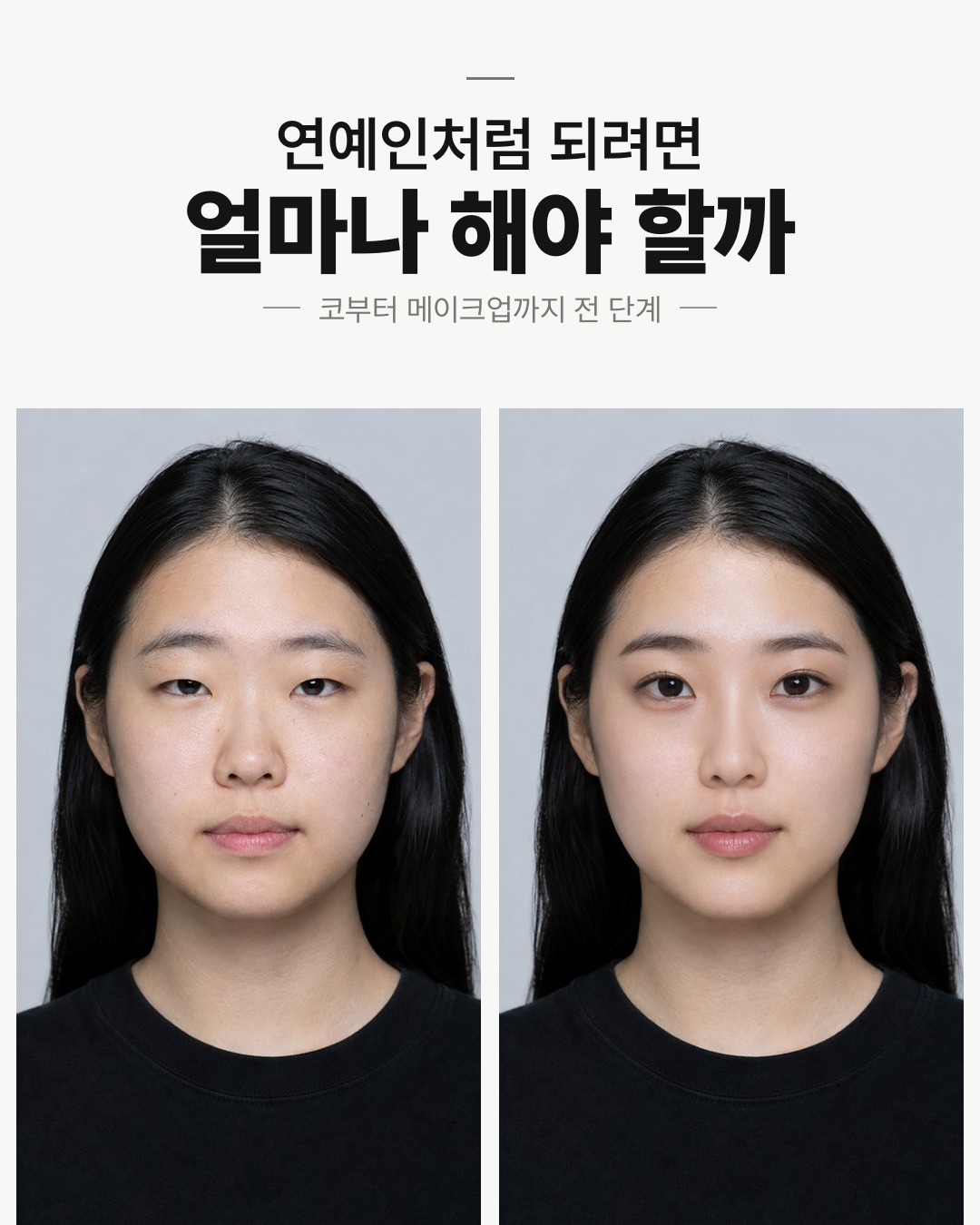
How Much Surgery Does It Take to Look Like a Celebrity? We Took One Face All the Way
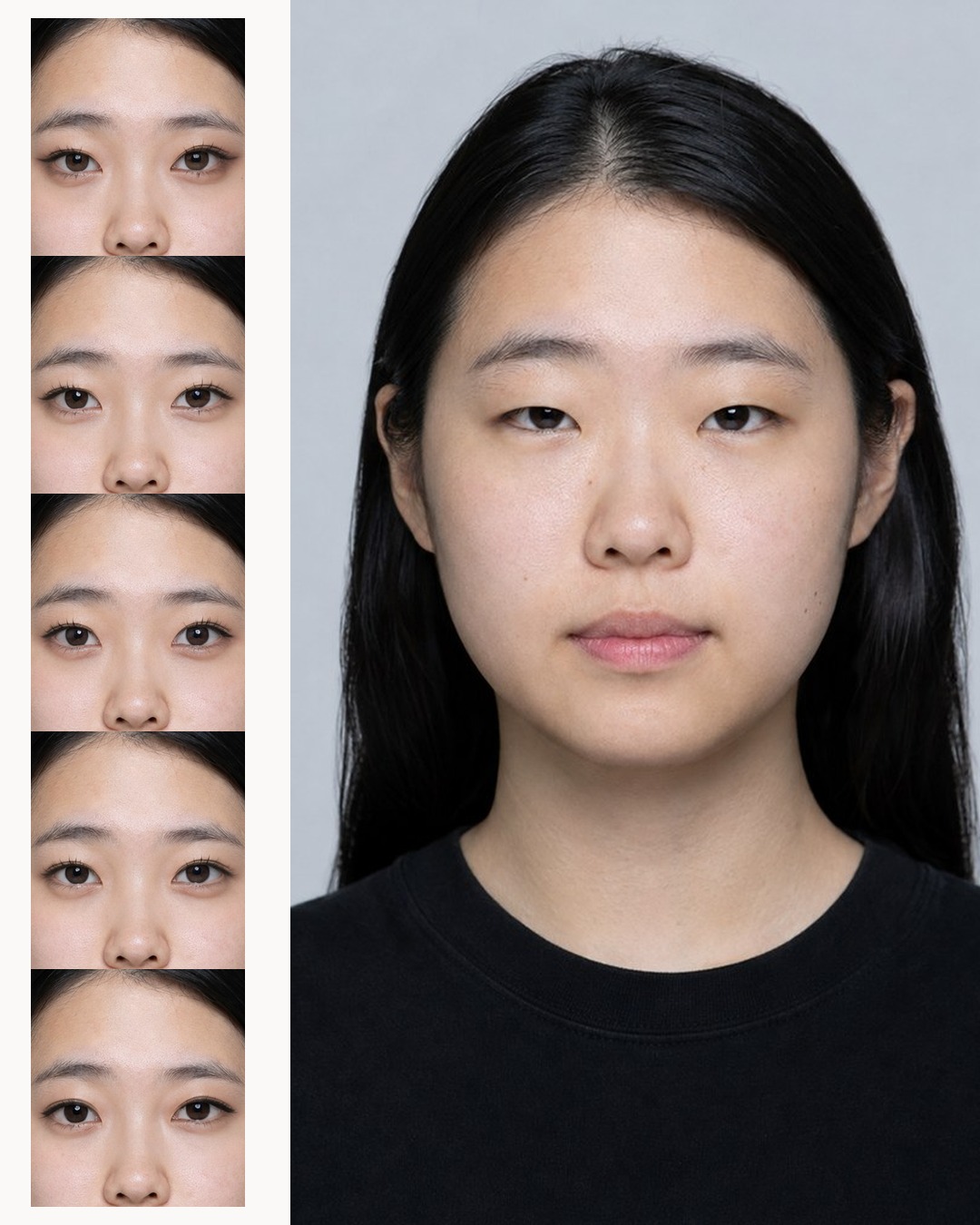
We went from the nose to the eyes, one step at a time, and measured each stage. The biggest single jump came from the eyes (in-line crease plus aegyo-sal).
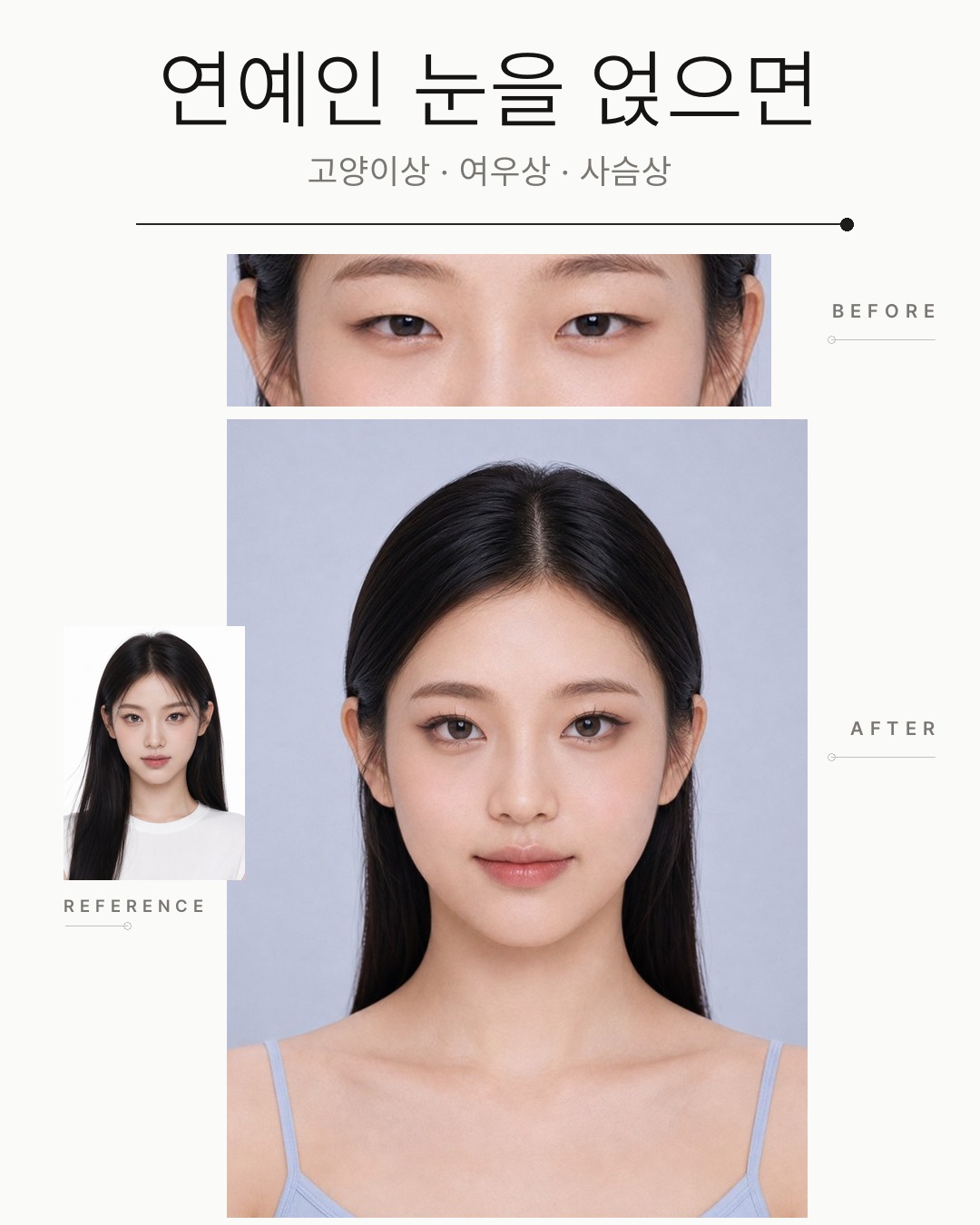
What Happens If You Put Celebrity Eyes Straight Onto Your Own Face?
We transferred three archetype eye styles onto one person's face. Only the eyes changed, yet the whole impression moved with them.
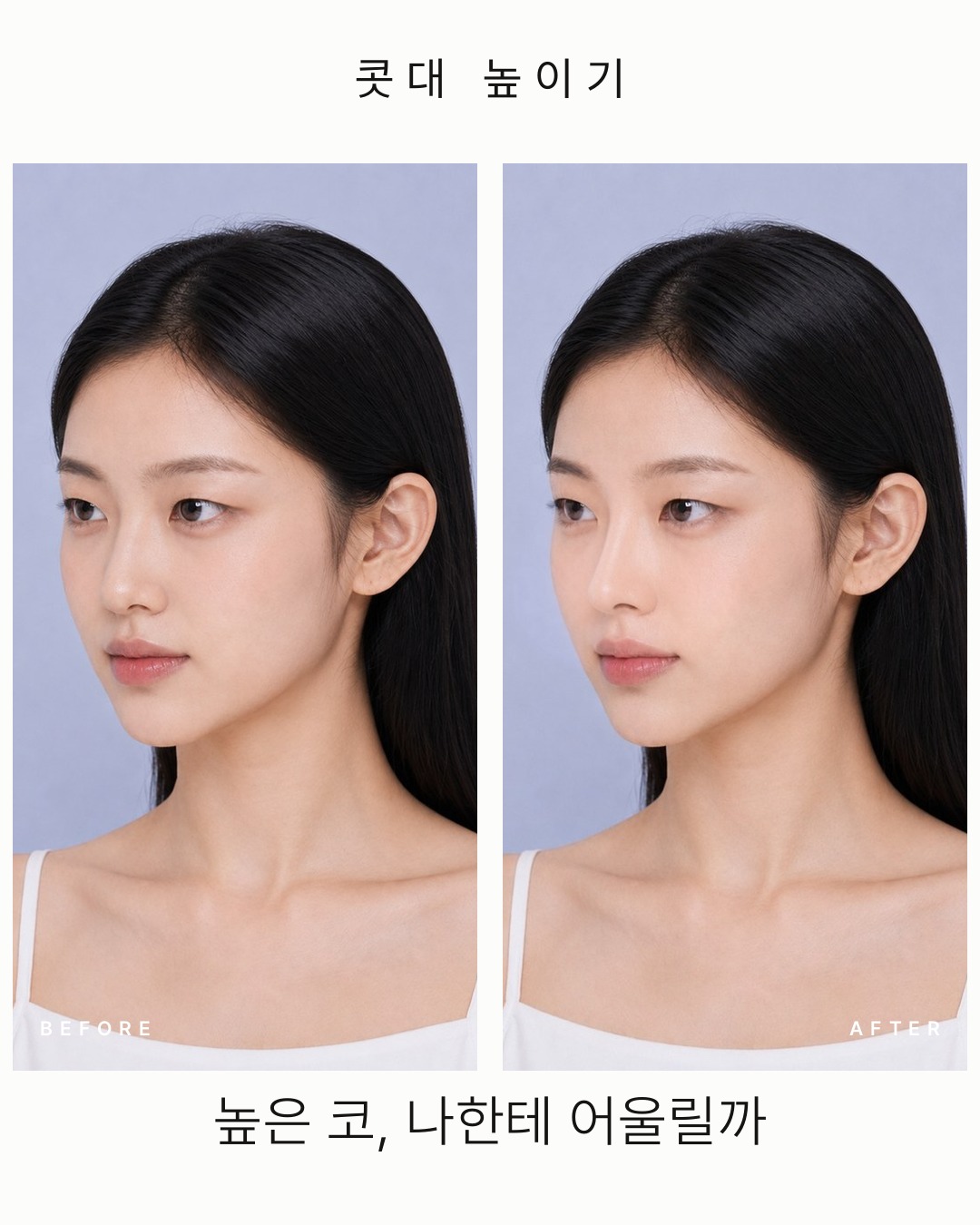
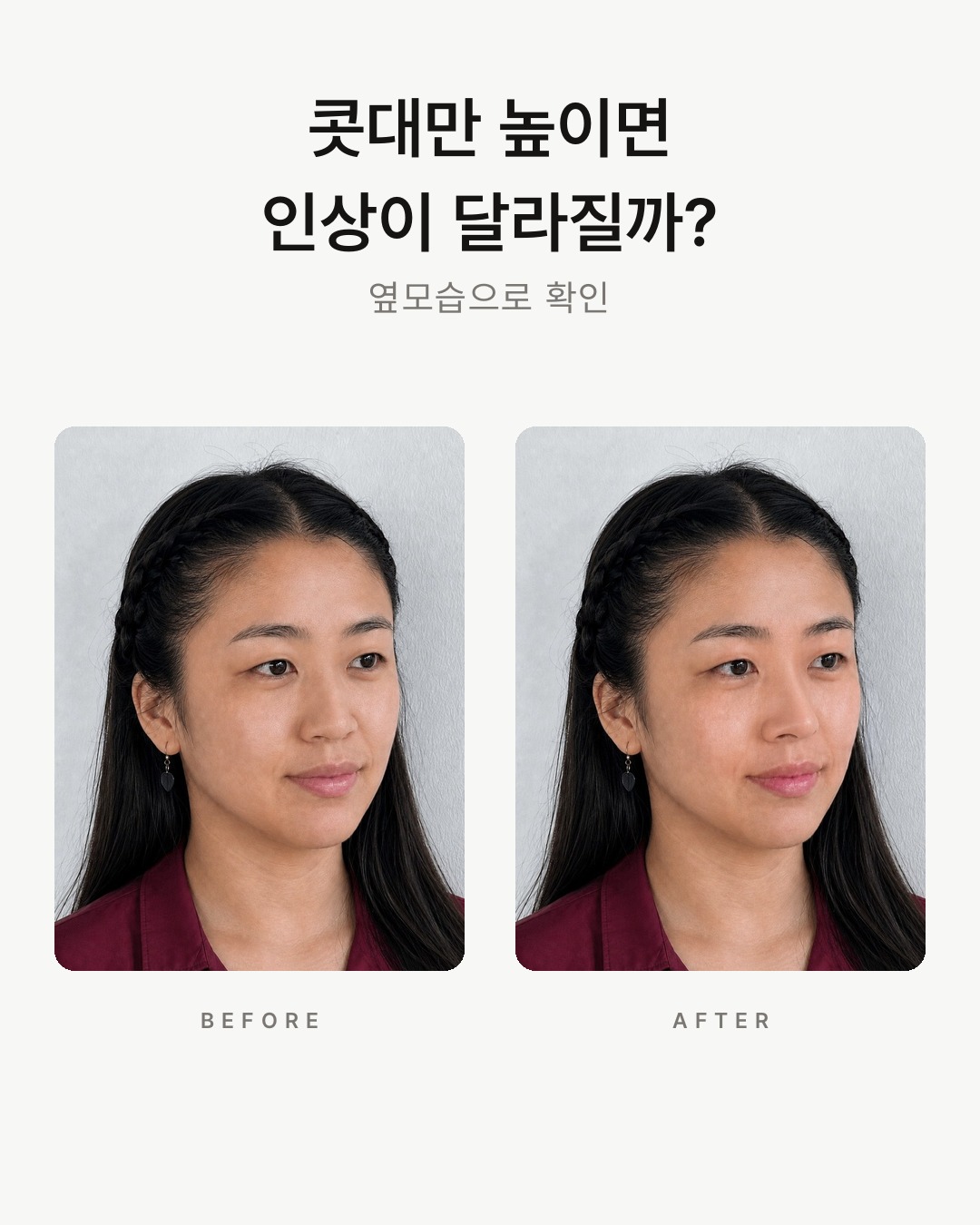
Would a High Nose Bridge Actually Suit Me? We Raised It All the Way to Find Out
To leave no doubt about whether it shows, we raised the bridge noticeably. A high nose sharpens the profile and, at the same time, moves the focal point of the face to the nose.
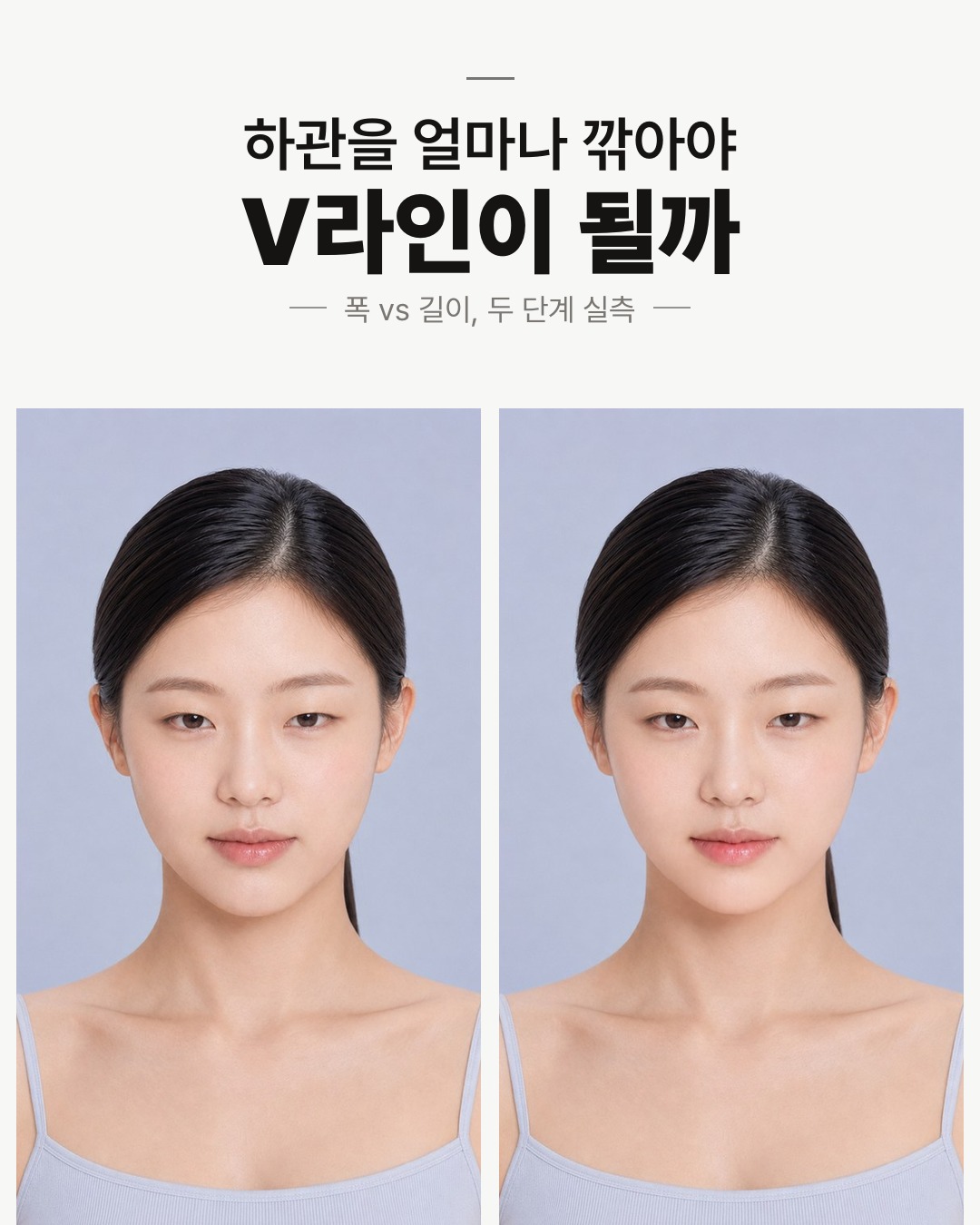
How much jaw do you need to reduce for a V-line? We measured it in two steps
We reduced the jawline first, then the chin length. Each changes a different measurement, and done together they partly cancel each other out.
Which eyes actually suit me? Seven looks tried on one face
Cat, deer, innocent and four more signature looks, each transferred onto the same face, then cropped to the eyes and compared with the reference photos.
Does Raising the Nasal Bridge Really Change Your Face? We Checked in Profile
A clearly visible bridge procedure applied to one person's profile. A single nose reshapes the entire side profile line.
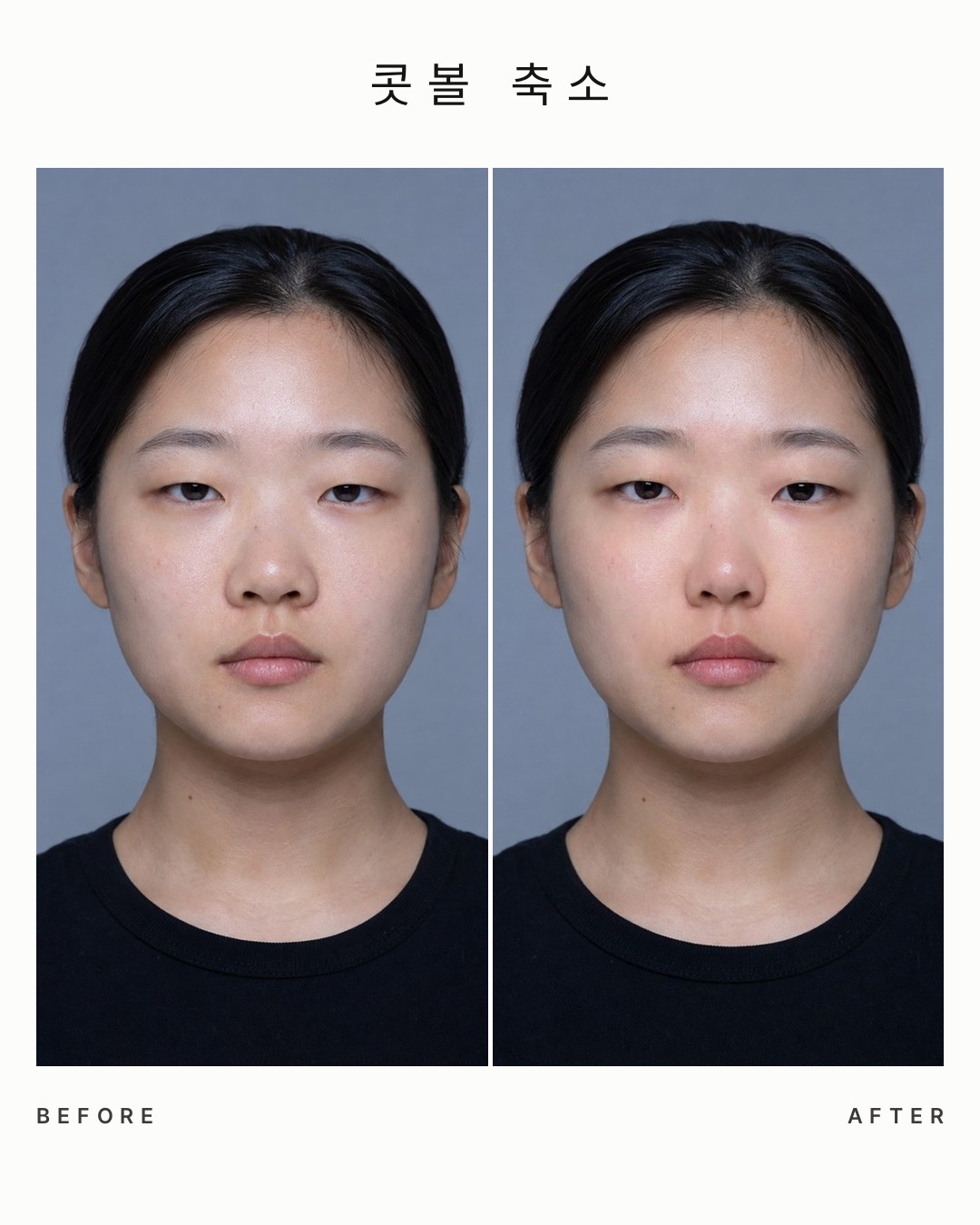
How Much Can Alar Reduction Alone Change a Face? We Narrowed It in Two Steps
We left the bridge untouched and narrowed only the alar width. Barely 1mm of change, yet the front view reads differently.
How High Should a Nose Bridge Go? We Raised It in Stages
Repeating the same procedure did not add height. Stacking different procedures is what finally separated the stages.

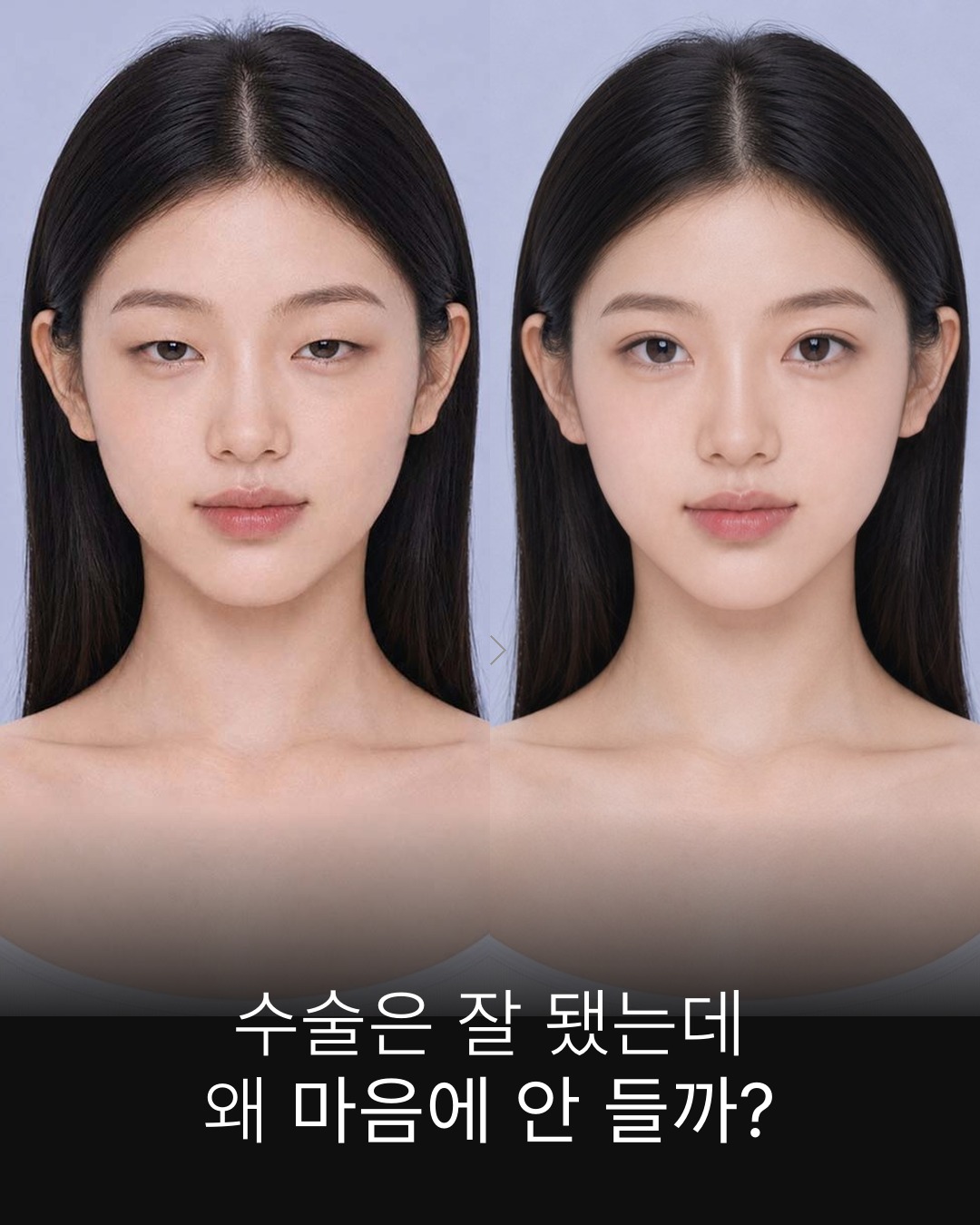
The surgery went well, so why don't I like it? It usually comes down to area and extent
"It came out the way I asked, but I'm not happy" is usually not an execution problem. Either the wrong area was changed, or the extent fell short.
Three Things to Check on Your Own Face Before a Plastic Surgery Consultation
Save consultation time by settling three things in advance. Your ceiling on intensity, the angle that matters, and the order.
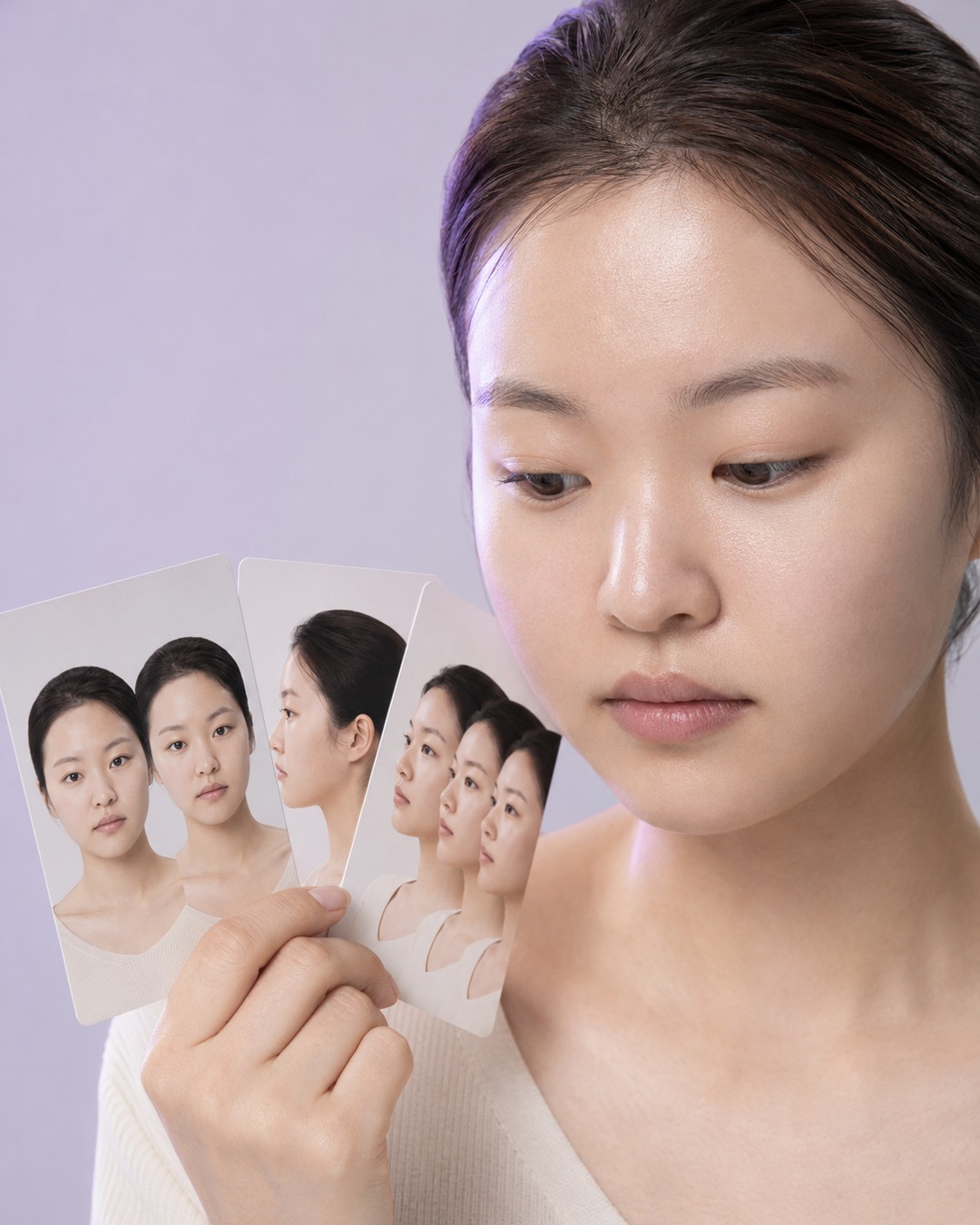
Why a smaller face can end up looking strange
Cheekbone, jaw and chin reduction applied one after another. The measurements keep shrinking, but past a certain point the impression turns the other way.
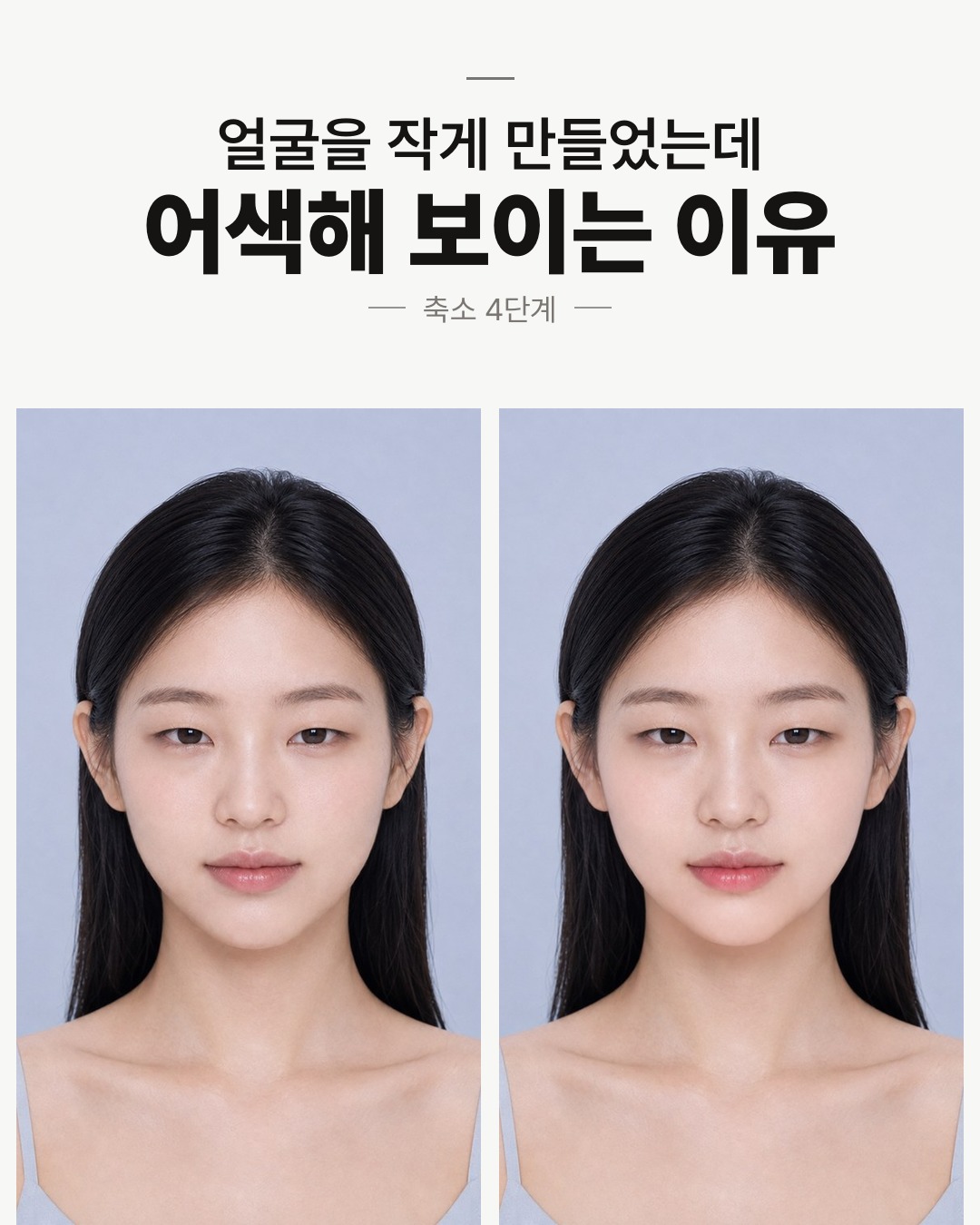
Is changing more always prettier? A step-by-step comparison
Eyes, nose, cheekbones and jaw were stacked onto one face in order. The step that changed the most was not the step that looked best.

Eyes Only, Nose Only, or Both? One Face, Three Versions Compared
The same person with eyes only, nose only, and both changed. One of the three shifted the overall impression far more than the others.

Cheekbone Reduction vs. Jaw Reduction: We Tried Each Alone on the Same Face
Cheekbones only, then jaw only, applied to the same face. The two operations work on different parts of the face.
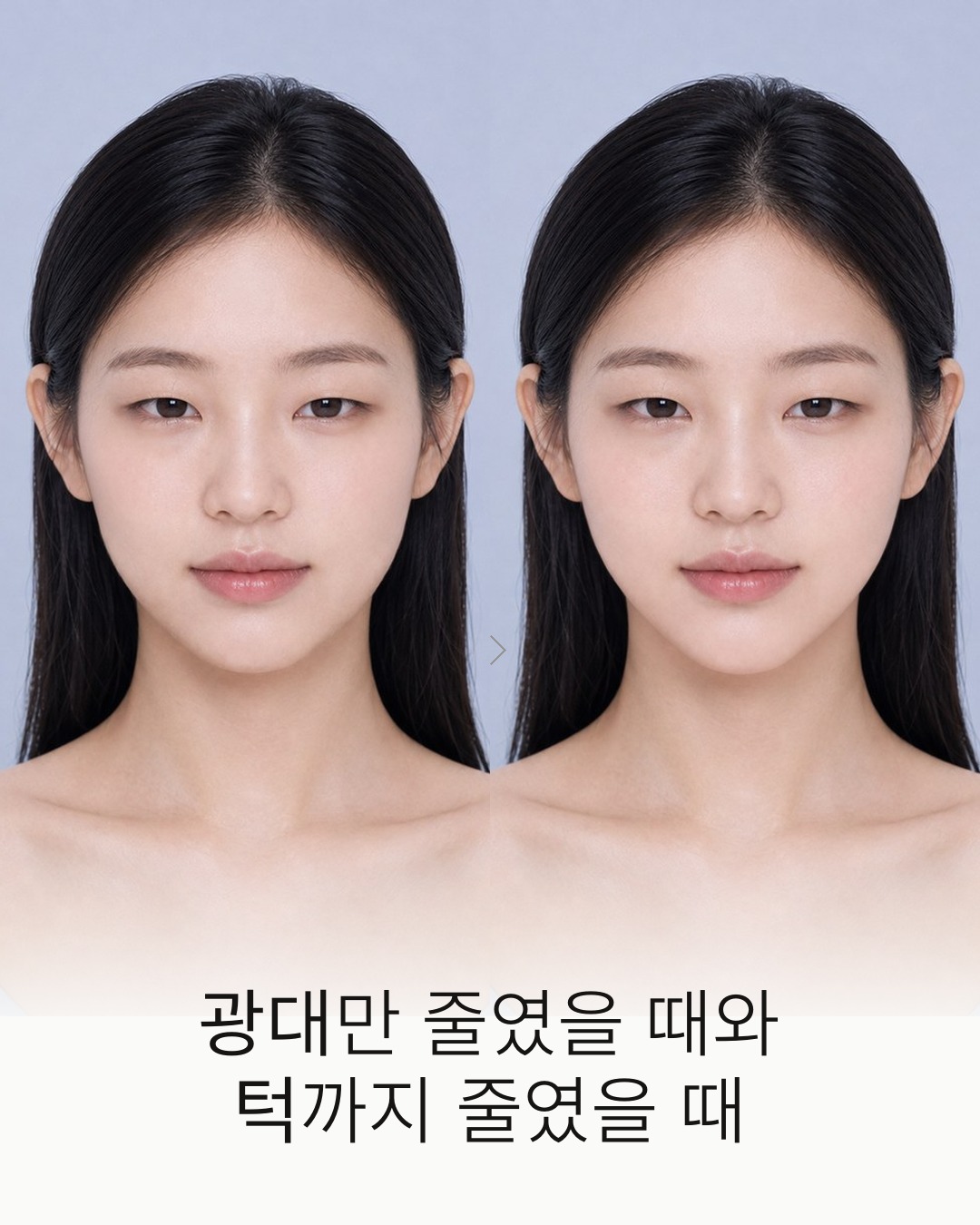
How much jaw reduction actually looks good? We tried three steps on one face
The step with the biggest reduction did not read as the best. The values that actually moved were 1 to 3mm.
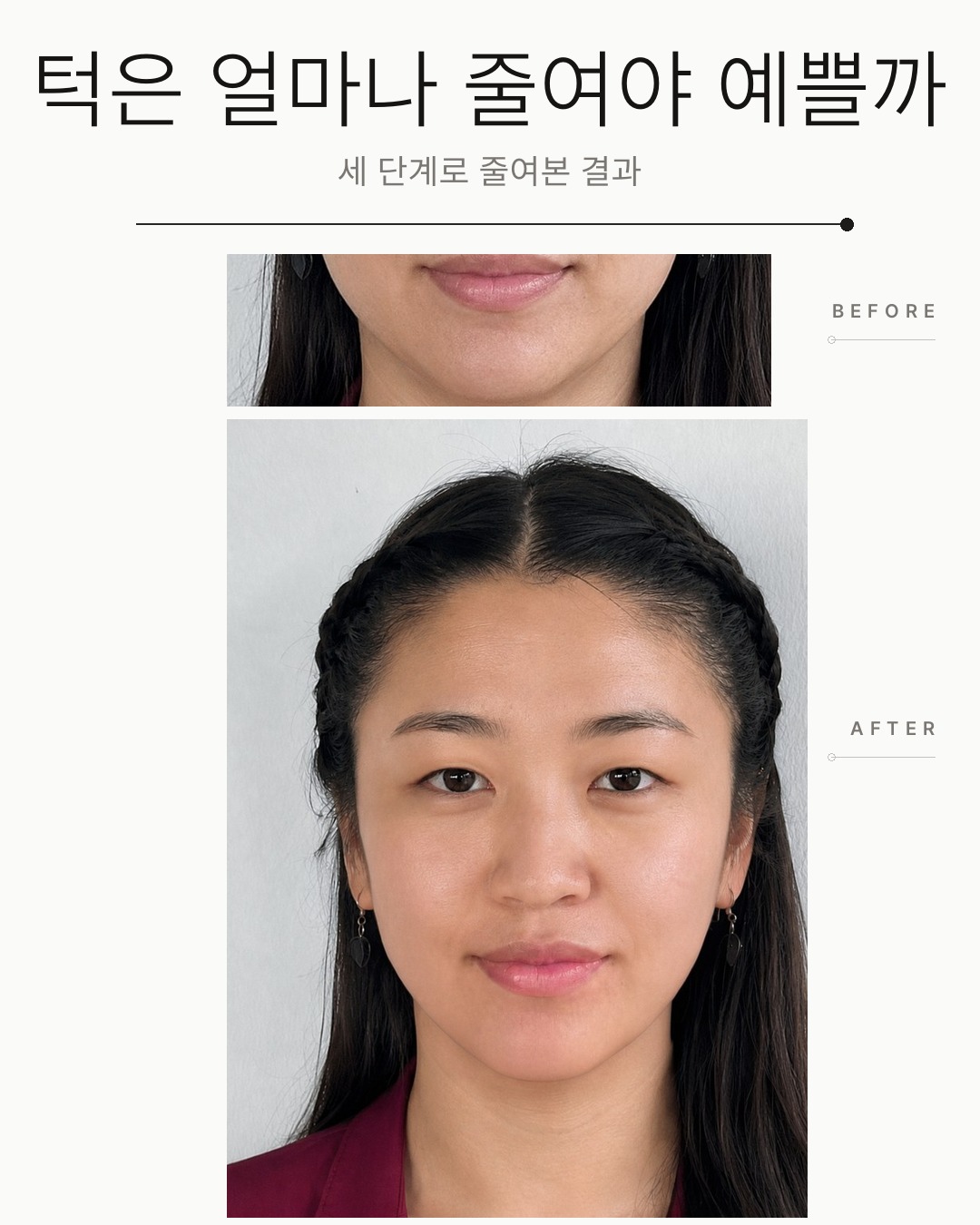
Does Raising the Bridge Alone Make a Face Prettier? We Compared It With a Tip-Only Change
On the same profile we applied a bridge-only change, a tip-only change, and both together. The three read as distinctly different impressions.
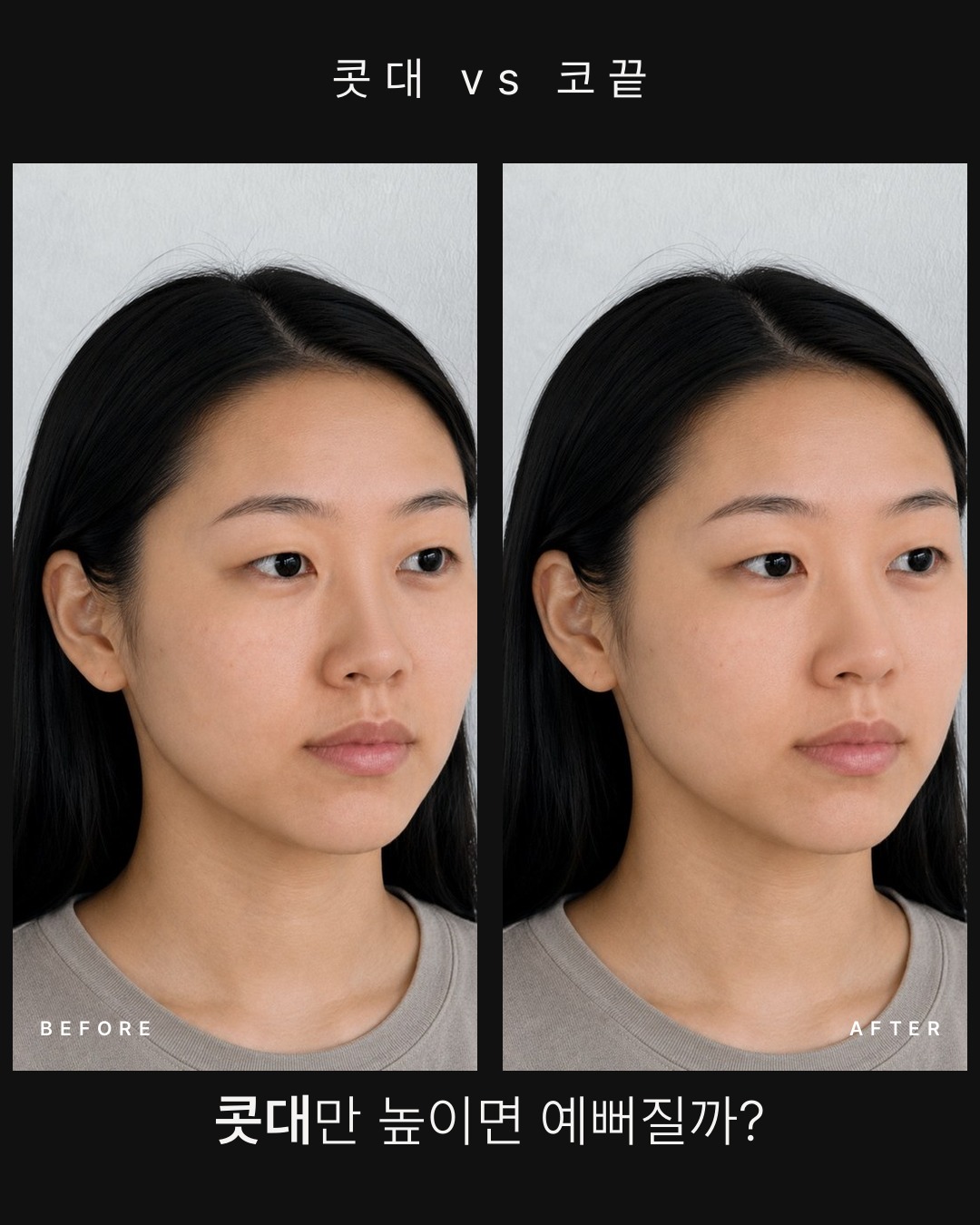
Straight Nose or Upturned Nose? All Four Shapes on the Same Face
The names split four ways, but the actual profile lines sit on a continuous spectrum. We applied all four shapes to one photo to see how much they really differ.
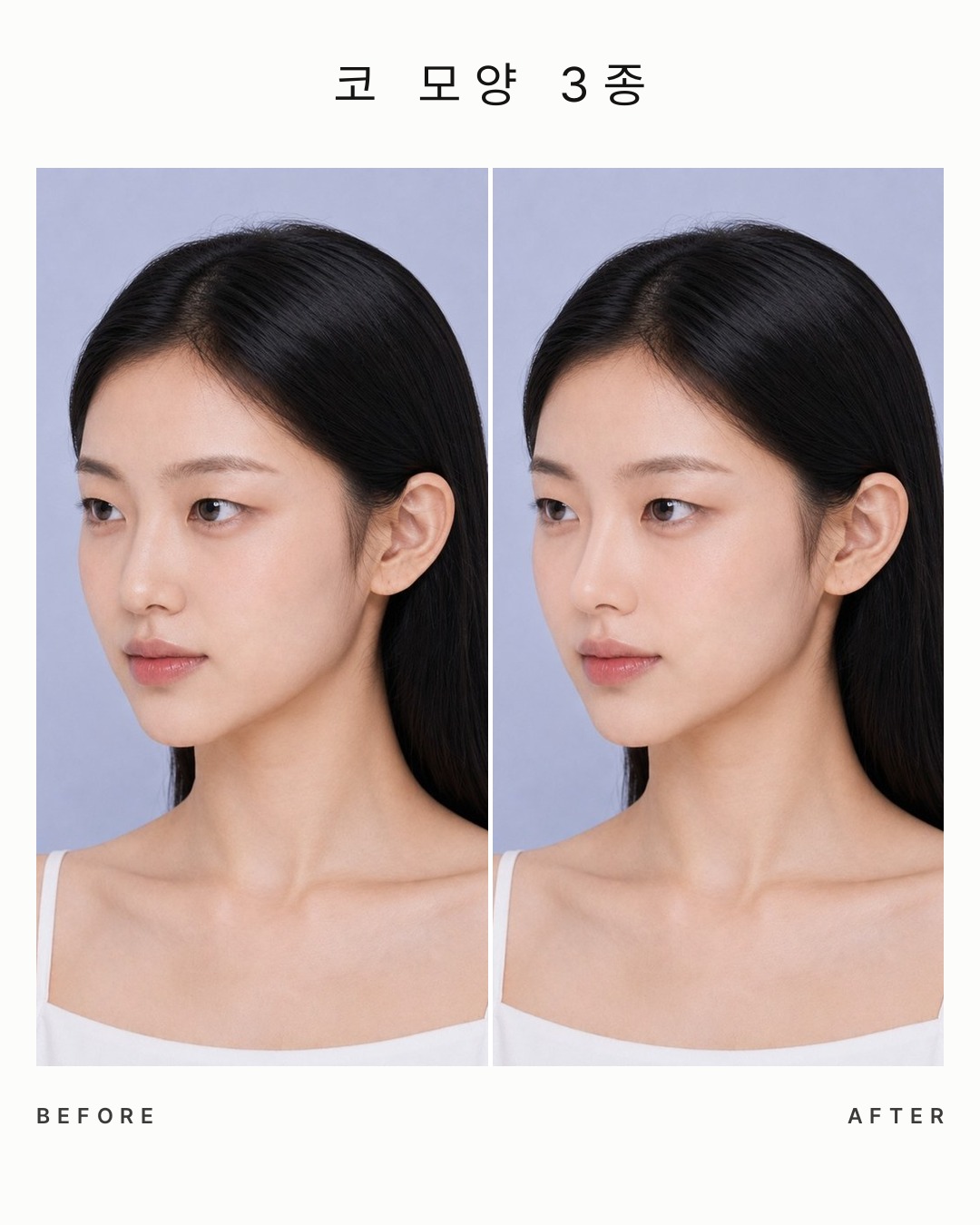
How natural is a "natural" double eyelid? Three strengths on one face
"Natural" means something different to everyone. We applied strength 1, 2 and 3 to the same face to see where the boundary actually sits.
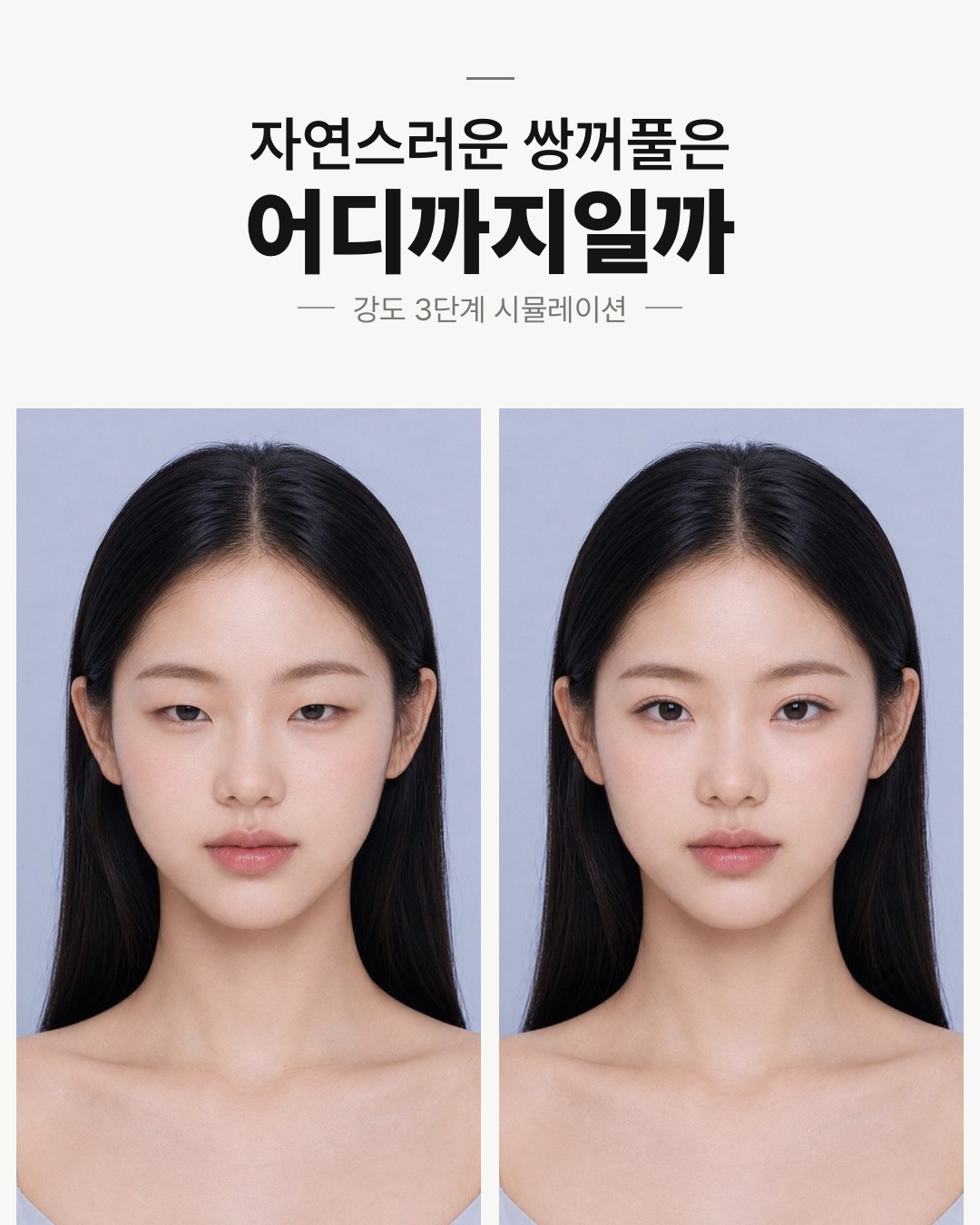
Does Epicanthoplasty Really Make Eyes Look Bigger? A Same-Face Comparison
Both versions keep the identical in-line double eyelid; only the epicanthoplasty toggles on and off. The eyes don't get bigger, they get longer toward the front.
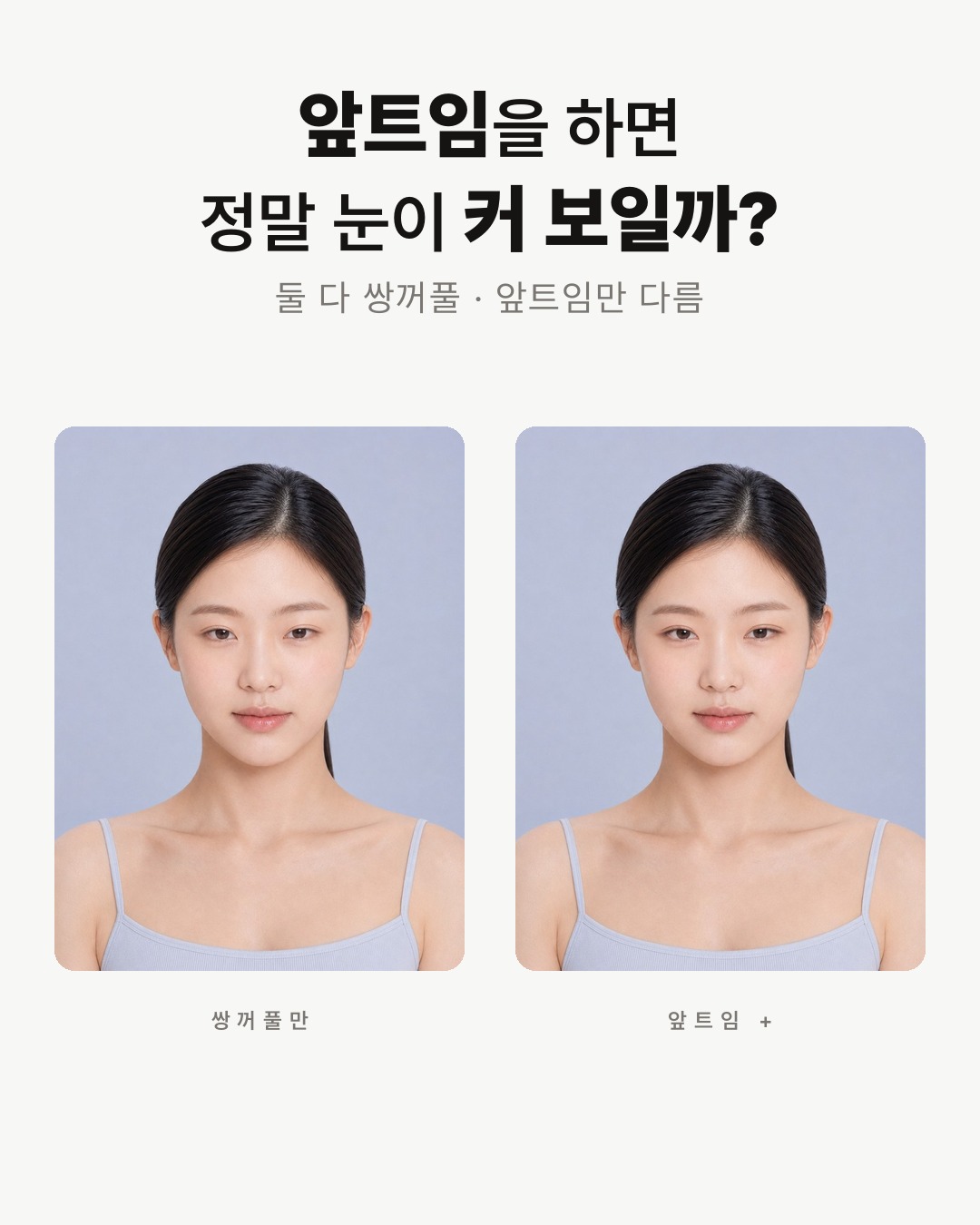
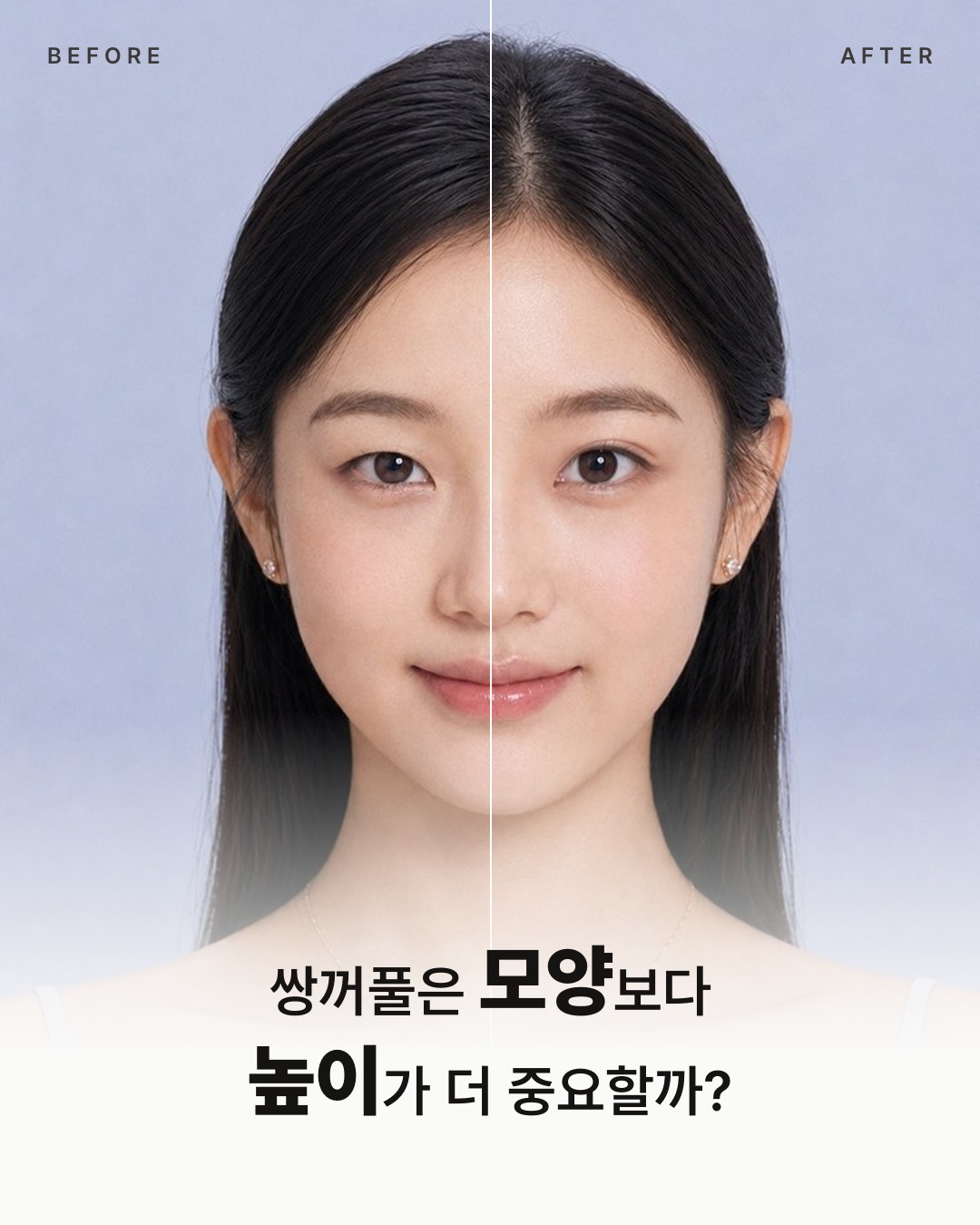
Does crease height matter more than shape? The same eyes at three heights
We spend the prep time choosing a line shape, but height may be what actually changes the impression. Low, medium, and high, applied to the same face and compared side by side.
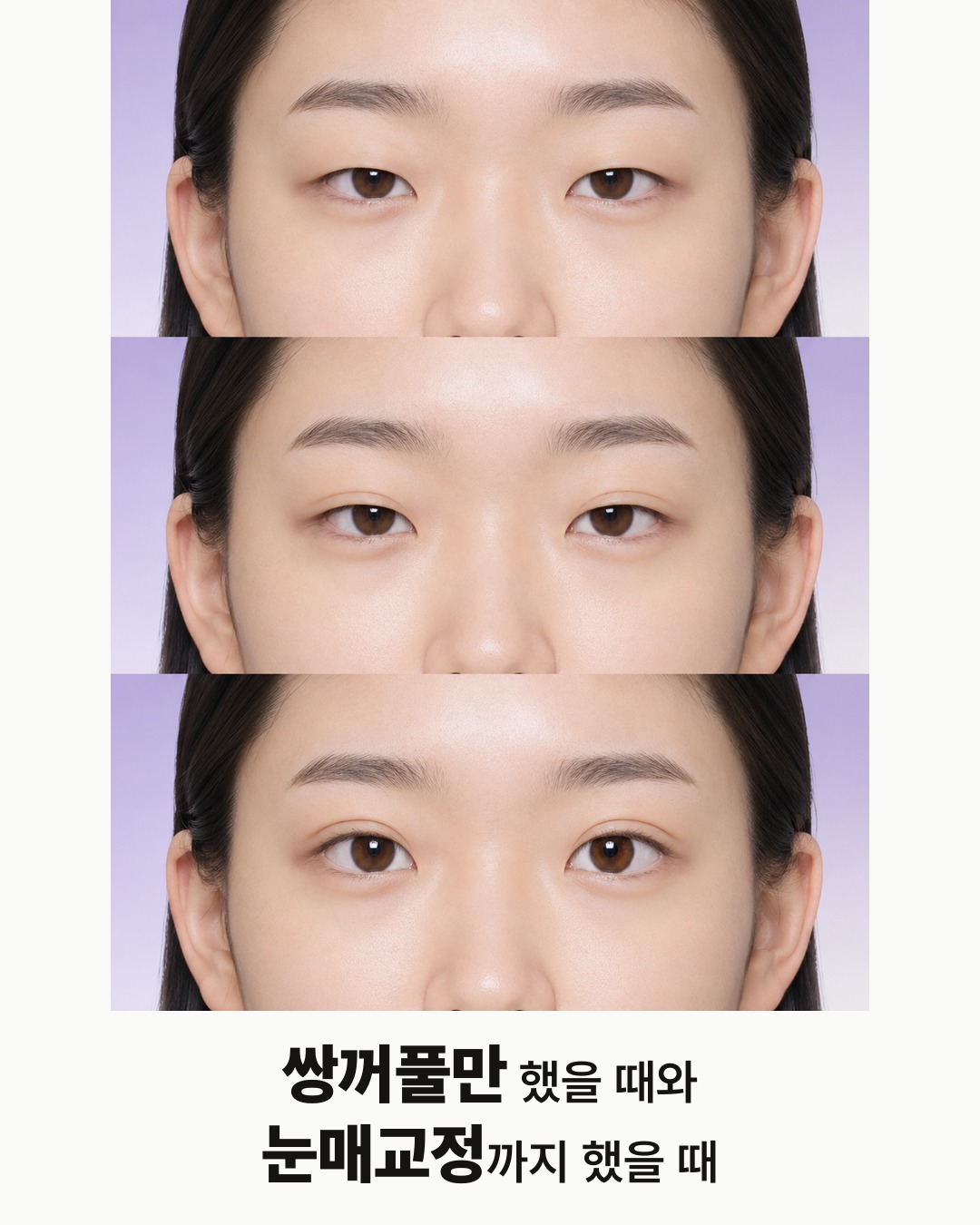
Crease alone versus crease plus levator correction: what changes?
The same in-line crease on the same face, with the eye-opening correction switched on and off. Adding a fold and opening the eye are two different things.
In-line, out-line, semi-out-line… so which one suits my eyes?
Three crease styles applied to a single face. Instead of comparing other people's before-and-afters, compare three images where only the line changed.